

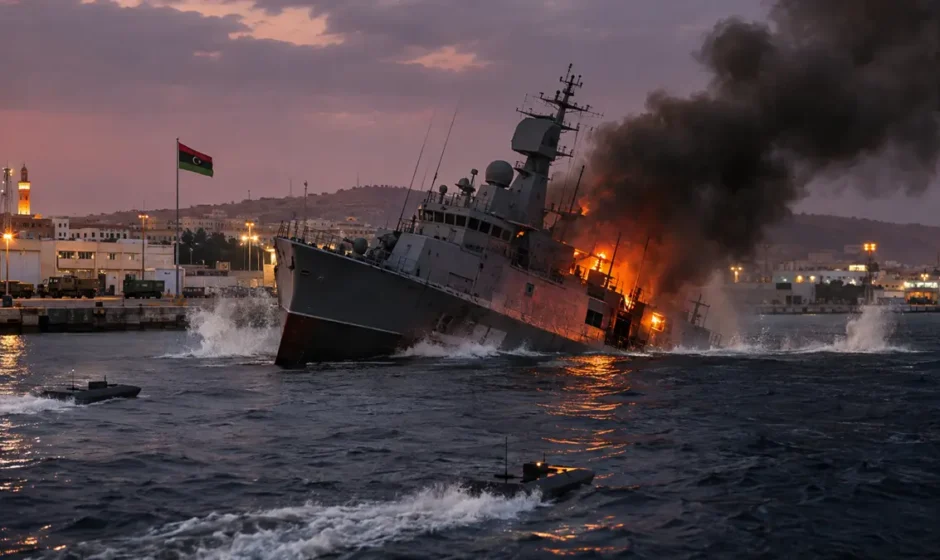
The Ukraine drone attack in Libya struck Russian vessels near Benghazi on 22 November 2026, with President Volodymyr Zelenskyy confirming Ukraine’s involvement on 23 November. Kyiv says seven Ukrainian-made naval drones sank the Russian warship Merkury and also hit the MV Angara cargo ship. Satellite images show the corvette capsized at the Benghazi naval base, although Russia has not independently confirmed Kyiv’s account of its loss. Libyan authorities and the UN have called for investigations.
Key Takeaways
- Ukraine acknowledged the strike on 23 November, a day after explosions at Benghazi.
- Kyiv says the Merkury sank and the MV Angara was also hit.
- Satellite imagery shows the corvette capsized, but does not establish every damage claim.
- Libyan officials offered a different account of how many drones reached the ship.
- The UN has called for an independent investigation.
What Happened at Benghazi Naval Base?
The November 22 Attack and the Following Day’s Confirmation
Residents reported explosions and a fire at the eastern Libyan port early on Sunday. Local emergency crews attended the scene, while authorities in the east initially described a suspected drone strike against a docked Russian vessel. Ukraine had not yet confirmed involvement.
On Monday, Zelenskyy claimed responsibility and described the attack as a successful Ukrainian operation. Associated Press reporting on the Benghazi strike compared Kyiv’s claims with accounts from Libya.
The strike occurred far from Ukraine, at a Libyan port supplying Russian ships.
Which Russian Ships Were Hit and What Does the Evidence Show?
Merkury and the Satellite Images
The Russian warship Merkury is a corvette, a patrol and escort vessel. Commissioned in 2023, it was among Russia’s newer vessels. Satellite images supplied by Vantor show it capsized following the Benghazi attack.
Footage released by Ukraine’s security service and verified by Reuters shows flames and smoke rising from the vessels. They do not establish whether the vessel can be recovered.
MV Angara and the Military Cargo Claim
Kyiv also identified MV Angara as a target. Ukrainian officials say it carried weapons and military equipment for Russia and was escorted by the Merkury. Its cargo on 22 November has not been independently verified.
Zelenskyy also claimed that a Ka-27 military helicopter was destroyed. The extent of the cargo ship’s damage and the reported helicopter loss have not been independently confirmed.
What Remains Unverified?
The Russian warship Merkury appears badly damaged in satellite imagery. Its precise recoverability, the cargo ship’s complete damage and any final casualty toll remain unresolved.
One Libyan official reported at least 10 people injured, including Libyan and Russian nationals. An independently verified final casualty figure has not been established.
How Did Ukraine Carry Out the Naval Drone Operation?
Seven Drones and a Reported Mothership
Ukraine’s Security Service, known as the SBU, says Ukrainian naval drones were delivered to the area and launched from a mothership near their targets. These are uncrewed surface vessels that travel over water without a person aboard.
Zelenskyy gave the total as seven Ukrainian-made drones. The SBU described the action as an operation against Russian military logistics. The vessels’ complete route remains unverified.
Why Initial Drone Counts Differ
Libyan military officials told AP that at least four suspected Ukrainian naval drones were intercepted and two hit the corvette. Kyiv subsequently cited seven drones used in the wider operation. The accounts describe different totals.
The footage shows attacks and fires, not a complete reconstruction of the mission. The Ukraine drone attack in Libya therefore leaves open significant questions about launch points and the role of personnel elsewhere in the country.
Why Were Russian Vessels Operating in Libya?
A Divided Country With Different Foreign Partners
Libya has competing centres of political authority. An internationally recognised government operates from Tripoli in the west, while the eastern administration is aligned with military commander Khalifa Haftar, whose forces have ties to Russia.
That division is central to understanding the Russian military presence in Libya. A port visit approved by eastern authorities does not necessarily reflect a common position across the country. Accusations about drone origins are therefore sensitive.
Benghazi’s Place in Maritime Logistics
Eastern authorities said the Merkury had stopped for fuel and supplies under a cooperation arrangement with Russia. Corvettes can escort cargo convoys. The Benghazi naval base therefore has significance beyond the immediate damage.
Ukraine says the MV Angara cargo ship was involved in military supply movements. Its actual cargo remains unverified.
Why Does This Matter for Britain and Mediterranean Maritime Security?
A Conflict Beyond the Black Sea
Previous attacks involving Ukrainian naval drones have largely centred on the Black Sea. This strike puts attention on Mediterranean maritime security, around military activity near civilian ports.
Libyan authorities separately reported that a Maltese-flagged commercial ship was hit off Benghazi. Responsibility for that strike remains unclear. There is no verified evidence here of a general shutdown of commercial shipping or an immediate cost increase for British importers.
The UK’s Policy Interest
Britain supports Ukraine and has a wider interest in safe maritime routes. The UK-EU summit agreements provide political context. In their 20 November joint statement, the UK and EU committed to closer cooperation on maritime security and freedom of navigation.
That commitment predates the Benghazi strike. It does not establish British involvement. For UK readers, the risk concerns regional stability, not a verified domestic impact.
How Have Russia, Libya and the UN Responded?
Moscow’s Position and Libya’s Competing Concerns
Kremlin spokesman Dmitry Peskov declined to give a detailed assessment and directed questions about the warship towards Russia’s Defence Ministry. Moscow had not publicly substantiated or accepted Ukraine’s full damage claims in the reporting reviewed on 23 November.
Eastern Libya’s administration called for an investigation into suspicions that drones were launched from western Libya. The Tripoli government separately warned against allowing Libyan territory and ports to become tools of foreign conflicts. The launch-location allegation remains unresolved.
The UN Call for an Independent Inquiry
The United Nations Support Mission in Libya urged an independent, transparent investigation and stressed Libya’s sovereignty. Its intervention underscores a risk that Mediterranean maritime security concerns could deepen Libya’s existing political divisions.
Questions still require answers.
- Will Russia provide a formal condition report on the Merkury?
- Can investigators establish the drones’ point of origin?
- Will further evidence clarify damage to the MV Angara cargo ship and the separate commercial vessel?
- Could the incident lead to new restrictions or security measures at Libyan ports?
These findings matter more than speculation about retaliation. Readers following Ukraine peace negotiations should also distinguish this military development from unannounced diplomatic outcomes.
Conclusion
The Ukraine drone attack in Libya has exposed a Russian naval operation far from the usual Black Sea fighting and renewed questions over who can operate militarily from Libya. Ukraine claims major losses for Moscow; imagery establishes serious damage, while the full consequences remain uncertain.
Official assessments and an independent inquiry are now essential for understanding the consequences for Mediterranean maritime security.
Follow The Global Critique for verified updates as those findings emerge.